 |
|
 21 December 2006, 11:46
|
#1
|
|
Member
Country: Canada
Town: Tobermory, Canada eh
Boat name: Verius
Make: Zodiac Hurricane 590
Length: 5m +
Engine: Yamaha F150
Join Date: Oct 2006
Posts: 1,366
|
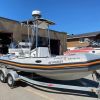
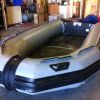
Hulls: Aluminum or Glass?
A friend of mine is contemplating buying a new Rib after being without one for a few years. He is looking at a number of boats over here, including Hurricanes, Polaris' and Titans, in the 4.5m - 5.5m range. He asked my opinion about aluminum hulls vs. fibreglass. Other than (I suppose) a durability issue I didn't really know what to say. I told him I would ask some experts I knew! I should perhaps point out that he will be using the boat in fresh water only.
(My main interest in this is that if he doesn't get a boat, I'm going to have to take him out in mine all the time and he takes up too much space...!)
|

|

|
|
22 December 2006, 01:30
|
#2
|
|
Member
Country: Canada
Town: British Columbia
Make: Gemini
Length: 4m +
Engine: 40hp 2 str
Join Date: Oct 2003
Posts: 2,151
|
If he'll frequently venture into areas that are reef strewn (which I imagine he might along along the north shores of Georgian Bay/L Huron) I'd lean towards aluminum. You might want to PM farsider for his thoughts on this since he's going through this same process - I think he's gearing towards glass. I imagine most glass hulls would provide a higher level of performance.
__________________
|
|
|
|
|
22 December 2006, 02:24
|
#3
|
|
Member
Country: Canada
Town: Tobermory, Canada eh
Boat name: Verius
Make: Zodiac Hurricane 590
Length: 5m +
Engine: Yamaha F150
Join Date: Oct 2006
Posts: 1,366
|
There's no doubt that we have our share of lumps in the water...
|
|
|
|
|
22 December 2006, 04:02
|
#4
|
|
Member
Country: Canada
Town: Vancouver B.C.
Length: no boat
Join Date: Dec 2006
Posts: 21
|
Really tough call like P/T is right on the money saying i love the performance of glass but out on the wet coast here there is a lot of logging and the thought of dead heads and the alluiman really sounds good Guy at polaris was telling me his glass is 7 layers and interwoven comes out 1/2 inch and there strong enough for any bump.I'm going back out there in the new year and he has a couple glass and ally going i'll take the camera and post if you want.
__________________
|
|
|
|
|
22 December 2006, 09:53
|
#5
|
|
Member
Country: USA
Town: boston
Boat name: Miss bad 61
Make: Crapko, AKA Mako
Length: 5m +
Engine: OMC Mod50
Join Date: Apr 2006
Posts: 398
|
Aluminum hulls tend to feel like your ridin in a Gong, evey time you hit a wave
it rings the gong.
__________________
|
|
|
|
|
22 December 2006, 12:37
|
#6
|
|
Member
Country: Canada
Town: Tobermory, Canada eh
Boat name: Verius
Make: Zodiac Hurricane 590
Length: 5m +
Engine: Yamaha F150
Join Date: Oct 2006
Posts: 1,366
|
Quote:
Originally Posted by fast fred

Aluminum hulls tend to feel like your ridin in a Gong, evey time you hit a wave
it rings the gong.
|
We don't have logs here... But we do have limestone! Although to be honest, the water is so clear, that you can normally see the bottom coming up from 40 or 50 feet. I understand that the aluminum hulls are more expensive as well.
Any idea how they compare weight-wise?
|
|
|
|
|
22 December 2006, 15:56
|
#7
|
|
Member
Country: UK - Wales
Town: swansea
Boat name: Too Blue
Make: BLANK
Length: 8m +
Engine: Suzuki DT225
Join Date: Mar 2004
Posts: 12,791
|
If anyone is in any doubt how tough a fibreglass hull is remember the RNLI use them!!!
This video shows how they recover a lifeboat across a shingle beach - made me cringe to watch it - they must be tough to withstand this treatment over the years....
__________________
|
|
|
|
|
22 December 2006, 16:56
|
#8
|
|
Member
Country: USA
Town: Oakland CA
Length: 3m +
Join Date: Feb 2005
Posts: 6,653
|
Quote:
Originally Posted by fast fred
Aluminum hulls tend to feel like your ridin in a Gong, evey time you hit a wave
it rings the gong.
|
No it doesn't. It will ride a bit "stiffer", though, for a hull built to a given strength, as an aluminum hull will be lighter, hence less mass to displace the water.
Aluminum advantages: lighter weight (makes a difference in trailering), minor damage usually requires no maintenance, very little upkeep (assuming a decent alloy is used in construction), any major repairs are usually a welding shop away. I personally think that a well built plate alloy boat is much stronger than a glass hull, but we're talking about catastrophic impact here, so that may not be a selling point. Small repairs, while not tough, may be more expensive to perform than similar damage to a glass boat (i.e. less of a DIY thing, unless you are a welder. I just leave it be.) Small flaws usually are much less of a problem (no water seepage into cores, and resulting rot problems, for instance.)
Aluminum disadvantages: Cost (with a capital C), possibility of galvanic corrosion, limited forming methods may mean a less appealing shape (subjective), may be more difficult to find bottom paint (for those who moor their boats), painting (topside) requires a lot more care to get paint to adhere. In my case, you get a lot of people asking about the cost, and why I paid more than I would have for a glass boat; which gets kind of annoying after a while (getting out on the water helps quite a bit.)
Either can be quite good, or, I would assume, quite bad, depending on circumstances. For me, the durability of aluminum in day to day use is what spurred my decision.
jky
__________________
|
|
|
|
|
22 December 2006, 18:05
|
#9
|
|
Member
Country: Other
Town: Stanley, Falkland Is
Boat name: Seawolf
Make: Osprey Vipermax 5.8
Length: 5m +
Engine: Etec 150
Join Date: Mar 2006
Posts: 3,726
|
Rotationally moulded polyethylene!
Seems the way forwards to me, and I look forward to the expession on people's faces when I say I have a polythene boat 
__________________
A Boat is a hole in the water, surrounded by fibreglass, into which you throw money...
Sent from my Computer, using a keyboard and mouse
|
|
|
|
|
22 December 2006, 19:29
|
#10
|
|
Member
Country: UK - Wales
Town: swansea
Boat name: Too Blue
Make: BLANK
Length: 8m +
Engine: Suzuki DT225
Join Date: Mar 2004
Posts: 12,791
|
Yes the poly boats are incredibly tough - the reason you don't see them over a certain size or HP rating is because they are very flexible and would flop all over the place!!!
__________________
|
|
|
|
|
22 December 2006, 23:52
|
#11
|
|
RIBnet admin team
Country: UK - Scotland
Boat name: imposter
Make: FunYak
Length: 3m +
Engine: Tohatsu 30HP
MMSI: 235089819
Join Date: Sep 2005
Posts: 11,622
|
Quote:
Originally Posted by codprawn
Yes the poly boats are incredibly tough - the reason you don't see them over a certain size or HP rating is because they are very flexible and would flop all over the place!!!
|
I beg to differ. A well designed polyethylene hull will be just as rigid as a similar sized GRP or ally boat.
The reason there is a size limit is much simpler. To make a poly boat you need a metal tool (bigger than the boat) which need to be mounted in a 3axis rotating apparatus. The whole lot needs to be heated in a controlled manner (usually in a giant oven). The set up costs are high and need to be recovered through volume product. The fundamental limit is how big the "moulding machine" you can get/have is.
Supply and demand means the cost of setting up large boats on rotomoulded tooling is less rewarding than using GRP or Ally. However there are plastic rotomoulded boats on the market which are at least 7.2m long (possibly bigger).
Flexibility is NOT an issue for rotomoulded boats.
__________________
|
|
|
|
|
22 December 2006, 23:59
|
#12
|
|
Member
Country: Canada
Town: Tobermory, Canada eh
Boat name: Verius
Make: Zodiac Hurricane 590
Length: 5m +
Engine: Yamaha F150
Join Date: Oct 2006
Posts: 1,366
|
Thanks folks...
I'll pass along the info. He has been talking to Polaris. Apparently, they are suggesting glass is better for him, since he doesn't plan on much log-hopping...
|
|
|
|
|
23 December 2006, 01:14
|
#13
|
|
Member
Country: USA
Town: Punta gorda Fl.
Boat name: War Machine
Make: Falcon U.S.A.
Length: 9m +
Engine: twin 250 Yamaha
Join Date: Jan 2006
Posts: 936
|
Plastic Boats Suck!!!
Quote:
Originally Posted by codprawn
Yes the poly boats are incredibly tough - the reason you don't see them over a certain size or HP rating is because they are very flexible and would flop all over the place!!!
|
I had a friend who had a Logic boat, (21 ft. center console) made of "Roplene", a fancy name for some form of plastic. Let me tell you something, from what I saw of that boat after a couple of years, NEVER buy a boat made out of plastic, what a piece of garbage! Know what a plastic hull does after it has been subjected to the pounding of the waves, weather and sun? Things start to deform somewhat, screws into the plastic walk out constantly, Stress points where things are thru bolted have a tendency to tear, how do you fix something that is roto-molded plastic with tears or rips? The transom had a metal u shaped plate over both the inside and outside of it, where the metal stopped and the plastic started again it was tearing apart due to the motor weight and resulting torque stress from running the boat, it was slowly but very steadily coming apart. The entire hull had these problems here and there, plus it was just way too flexible, unsuitable for the intended application. A much smaller boat made of the same material might be workable but this material is far far inferior to either fiberglass, metal or wood as a hull material. I have never, never seen anything worse than this thing after 3 years of use...
There probably are better types of material out there but in the case of Roplene, NOT!
__________________
|
|
|
|
|
23 December 2006, 01:19
|
#14
|
|
Member
Country: UK - Wales
Town: swansea
Boat name: Too Blue
Make: BLANK
Length: 8m +
Engine: Suzuki DT225
Join Date: Mar 2004
Posts: 12,791
|
Quote:
Originally Posted by Polwart
I beg to differ. A well designed polyethylene hull will be just as rigid as a similar sized GRP or ally boat.
The reason there is a size limit is much simpler. To make a poly boat you need a metal tool (bigger than the boat) which need to be mounted in a 3axis rotating apparatus. The whole lot needs to be heated in a controlled manner (usually in a giant oven). The set up costs are high and need to be recovered through volume product. The fundamental limit is how big the "moulding machine" you can get/have is.
Supply and demand means the cost of setting up large boats on rotomoulded tooling is less rewarding than using GRP or Ally. However there are plastic rotomoulded boats on the market which are at least 7.2m long (possibly bigger).
Flexibility is NOT an issue for rotomoulded boats.
|
I am pretty familiure with plastic moudling - we had a few injection moulding machines ourselves a few years ago.
Flexability is an issue - remember it is this flexibility that makes them so tough - that's why they don't crack when dropped. Power limits are pretty low on such craft because of this. Ribs and frames could be added but would take up a lot of room and add a hell of a lot of weight.
Don't get me wrong - I am a great fan of this kind of material for the right application.
__________________
|
|
|
|
|
23 December 2006, 08:48
|
#15
|
|
RIBnet admin team
Country: UK - Scotland
Boat name: imposter
Make: FunYak
Length: 3m +
Engine: Tohatsu 30HP
MMSI: 235089819
Join Date: Sep 2005
Posts: 11,622
|
Quote:
Originally Posted by codprawn
I am pretty familiure with plastic moudling - we had a few injection moulding machines ourselves a few years ago.
Flexability is an issue - remember it is this flexibility that makes them so tough - that's why they don't crack when dropped. Power limits are pretty low on such craft because of this. Ribs and frames could be added but would take up a lot of room and add a hell of a lot of weight.
Don't get me wrong - I am a great fan of this kind of material for the right application.
|
Injection moulding and rotomoulding are two completely different things. Injection moulding (which is excellent for its appropriate application) leaves inherent stress in the part. Rotomoulding should leave the part stress free.
The biggest injection moulded boat available (and I think the biggest injection moulded part in the world) are topper sailing dinghies.
Power limits are generally in line with the power limits that would be set under typical RCD classification of a GRP rib of the same size.
Good design is the key to avoiding flexing. Polythene is pretty low density so "ribs" to add rigidity add very little weight. The simplest way to "beef up" the rigidity is to increase the thickness of material (some of these boats are over 1/2 inch thick solid plastic). Since the rigidity obeys a cube law small increases in thickness have big effects on rigidity.
I suggest you get your physics textbook out codders - flexibility and toughness are entirely independent. flexibility is actually more related to strength (but also the shape/design). as a reminder toughness describes the energy required to produce failure, strength the energy required to produce deformation.
__________________
|
|
|
|
|
23 December 2006, 09:09
|
#16
|
|
RIBnet admin team
Country: UK - Scotland
Boat name: imposter
Make: FunYak
Length: 3m +
Engine: Tohatsu 30HP
MMSI: 235089819
Join Date: Sep 2005
Posts: 11,622
|
Quote:
Originally Posted by pathalla
I had a friend who had a Logic boat, (21 ft. center console) made of "Roplene", a fancy name for some form of plastic. Let me tell you something, from what I saw of that boat after a couple of years, NEVER buy a boat made out of plastic, what a piece of garbage! Know what a plastic hull does after it has been subjected to the pounding of the waves, weather and sun? Things start to deform somewhat, screws into the plastic walk out constantly, Stress points where things are thru bolted have a tendency to tear, how do you fix something that is roto-molded plastic with tears or rips? The transom had a metal u shaped plate over both the inside and outside of it, where the metal stopped and the plastic started again it was tearing apart due to the motor weight and resulting torque stress from running the boat, it was slowly but very steadily coming apart. The entire hull had these problems here and there, plus it was just way too flexible, unsuitable for the intended application. A much smaller boat made of the same material might be workable but this material is far far inferior to either fiberglass, metal or wood as a hull material. I have never, never seen anything worse than this thing after 3 years of use...
There probably are better types of material out there but in the case of Roplene, NOT!
|
Roplene is a trade name for a "rotationally mo[u]lded polyethylene" which is the same material most of these boats are made from - in the same way that all "grp" boats are made from glass reinforced plastic. There will be different grades of material - but generally they will be similar. I suspect the problem you describe is not fundamentally with the material - but with the design. Anyone buying such a boat (or indeed any outboard powered boat) should pay attention to the mounting of the transom to the rest of the hull.
Questions also need to be asked about hull thickness. A similar deign of boat typically has a thicker plastic hull than it would in GRP. Cutting down on thickness saves the manufacturer money (particularly in times of high oil price) and he may even say the boat will go faster (as it is lighter) - but has a dramatic effect of rigidity/flexibility.
Some of the manufacturers offer reasonably long garuantees on the hull integrity because they are so sure of the material/design.
Fixings take a little thought - as they would in an ally or grp hull though. If the manufacturer knows where a part is to go he can mould the nut/fitting into the design, if not it needs appropriate backing - and to be fitted in a suitable place in the boat. As the material is "slippy" - self tappers may be even less appropriate than in other boats.
You can repair the material by welding - its is a specialist skill though.
Pathalla there are plenty of under engineered GRP hard boats on your side of the pond - if you saw them you could equally say "never buy a GRP boat". One bad apple and all that...
__________________
|
|
|
|
|
23 December 2006, 09:12
|
#17
|
|
Member
Country: USA
Town: Oakland CA
Length: 3m +
Join Date: Feb 2005
Posts: 6,653
|
Logic and Triumph both build boats from Roplene (co-owned companies, I think.)
From the Triumph website: "Most boat hulls are rigid and stiff as boards, creating an uncomfortable, jarring ride. On the other hand, the shock-absorbing Roplene hull of the 195 CC soaks up the impact of every wave. The result? A ride so quiet, soft and dry you have to experience it to believe it."
So, apparently the flexibility is a selling point (though I have also heard that their ride is not all that great.)
The reports of problems from the softness of the plastic and such that Pathalla mentioned are apparently pretty widespread. A buddy of mine has a 19' Triumoh, and is constantly trying to lock screws in place.
Don't know about the comment about low-ish power limits; the Triumph line has a max HP rating of 150 for their 19', and 250 for their 22, which doesn't seem that far out of line.
jky
__________________
|
|
|
|
|
23 December 2006, 09:21
|
#18
|
|
RIBnet admin team
Country: UK - Scotland
Boat name: imposter
Make: FunYak
Length: 3m +
Engine: Tohatsu 30HP
MMSI: 235089819
Join Date: Sep 2005
Posts: 11,622
|
Quote:
Originally Posted by jyasaki
Logic and Triumph both build boats from Roplene (co-owned companies, I think.)
From the Triumph website: "Most boat hulls are rigid and stiff as boards, creating an uncomfortable, jarring ride. On the other hand, the shock-absorbing Roplene hull of the 195 CC soaks up the impact of every wave. The result? A ride so quiet, soft and dry you have to experience it to believe it."
So, apparently the flexibility is a selling point (though I have also heard that their ride is not all that great.)
The reports of problems from the softness of the plastic and such that Pathalla mentioned are apparently pretty widespread. A buddy of mine has a 19' Triumoh, and is constantly trying to lock screws in place.
Don't know about the comment about low-ish power limits; the Triumph line has a max HP rating of 150 for their 19', and 250 for their 22, which doesn't seem that far out of line.
jky
|
Ahhh - sounds like marketing spin - and possibly the advice should be to avoid Triumph rather than plastic boats!
There is nothing "shock absorbing" about my plastic boat - from a completely different builder.
__________________
|
|
|
|
|
23 December 2006, 12:36
|
#19
|
|
Member
Country: Other
Town: Stanley, Falkland Is
Boat name: Seawolf
Make: Osprey Vipermax 5.8
Length: 5m +
Engine: Etec 150
Join Date: Mar 2006
Posts: 3,726
|
Quote:
Originally Posted by pathalla
I had a friend who had a Logic boat, (21 ft. center console) made of "Roplene", a fancy name for some form of plastic. Let me tell you something, from what I saw of that boat after a couple of years, NEVER buy a boat made out of plastic, what a piece of garbage! Know what a plastic hull does after it has been subjected to the pounding of the waves, weather and sun? Things start to deform somewhat, screws into the plastic walk out constantly, Stress points where things are thru bolted have a tendency to tear, how do you fix something that is roto-molded plastic with tears or rips? The transom had a metal u shaped plate over both the inside and outside of it, where the metal stopped and the plastic started again it was tearing apart due to the motor weight and resulting torque stress from running the boat, it was slowly but very steadily coming apart. The entire hull had these problems here and there, plus it was just way too flexible, unsuitable for the intended application. A much smaller boat made of the same material might be workable but this material is far far inferior to either fiberglass, metal or wood as a hull material. I have never, never seen anything worse than this thing after 3 years of use...
There probably are better types of material out there but in the case of Roplene, NOT!
|
Interesting then, that Mac offer a 5 year warranty on their boats ... not many RIBs come with that, some are only 1 year  a good sign of the confidence many manufacturers have in their products is the length of warranty they come with... and I may be wrong but I think that even now the manufacturers of my Exploding Orange only give 1yr. As for aluminium, well somebody on here told me they had one of the Busters and after a rough trip it was well and truly "busted". GRP gelcoat breaks on the first rock as I know to my cost. So they may all have their weaknesses I guess.
Worth a look http://www.triumphowners.net/forums/...ead.php?t=1050
The Mac boats have a HP limit of 120 which is enough for me in a 5.7m boat, would have preferred 150ish but hey it saves me money when I buy it 
__________________
A Boat is a hole in the water, surrounded by fibreglass, into which you throw money...
Sent from my Computer, using a keyboard and mouse
|
|
|
|
|
23 December 2006, 16:02
|
#20
|
|
Member
Country: UK - Wales
Town: swansea
Boat name: Too Blue
Make: BLANK
Length: 8m +
Engine: Suzuki DT225
Join Date: Mar 2004
Posts: 12,791
|
Quote:
Originally Posted by Polwart
Injection moulding and rotomoulding are two completely different things. Injection moulding (which is excellent for its appropriate application) leaves inherent stress in the part. Rotomoulding should leave the part stress free.
|
Well aware of that - just trying to show I am no stranger to the plastics industry . I am quite familiar with most of the common processes used!!!
__________________
|
|
|
|
|
|
 Posting Rules
|
You may not post new threads
You may not post replies
You may not post attachments
You may not edit your posts
HTML code is Off
|
|
|
|
 Recent Discussions
 |
|
|
|
|
|
|
|
|
|
|
|
|
|
|
|
|
|
|
|
|
|
|
|
|
|
|
|
|
|
|
|
|
|