 |
|
 22 February 2009, 18:28
|
#1
|
|
Member
Country: UK - England
Town: Southport
Boat name: Qudos
Make: 5.4 Searider
Length: 5m +
Engine: Yam 115 V4
MMSI: 235068784
Join Date: Sep 2008
Posts: 3,930
|
Gluing rubbing strakes
Need to glue two rubbing strakes the full width of my RIB. How much glue would you say I would need? And advice on doing it most welcome and where to buy from 
__________________
|

|

|
|
22 February 2009, 20:18
|
#2
|
|
Member
Country: UK - Wales
Town: Southampton
Boat name: DynaMoHumm/ SRV/deja
Make: Avon8.4, 5.4 & 4.777
Length: 8m +
Engine: Cat3126 Yam 90 &70
MMSI: 42
Join Date: Dec 2003
Posts: 6,562
|
what you need to do is very thoroughly prepare your surfaces, they have to be roughed up very well! You can do it with a plastic wire brush in a drill. I'm actually doing this at the moment so if you pm me your number I'll text you some pictures of the roughness.
The problem with doing it at the moment is the glue does not like the cold and you'd best wait for a month if you can't you'll need to ramp the hardener up in the glue a touch.25% say
tools needed
Bostik 2402 probably 1/2 a litre
Drill
Plastic wire brush http://www.tooled-up.com/MicroCatego...=3877#prodlist
Heat Gun
Paint brush
Thinners
Masking tape
Roller or heavy scraper.
Buddy or two
disposable latex gloves
the Strake will be more flexible if it's warm so keep it in the house near a rad for a day or so before you go for it.
After prepping the strake and tubes wipe down with a rag and thinners. after a while waft the heat gun over the areas to ensure evaporation of thinners.
Masking tape either side of the glue line will ensure no overspill of glue but you want 10 mm width more glue on the tubes than the strake.
Mix the glue up with a small amount of thinners 10% and hardener leave for a minute then paint a thin coat on both surfaces when this dry do it again. previous to this you will have put on 2 pairs of the disposable gloves. It means you can get rid of the top pair when it gets too gluey. When this coat becomes tacky you have to do the sticking
Now that you and your buddy have gotten wasted on the glue fumes the job becomes a lot more fun 
When you apply the strake it's a one time hit so you need to get it right. Also you have to stretch the strake on, pull it firmly as you are fitting it. when it's in place work the heat gun over it and rub it in firmly with the roller.
I have one of those brushes PM me your address and I'll send it to you we might have some glue too. If Christopher, Ribshop or Paul Tilley disagree with me then take there advice as they all have much more experience than me
__________________
|
|
|
|
|
23 February 2009, 10:51
|
#3
|
|
Member
Country: UK - England
Town: Southport
Boat name: Qudos
Make: 5.4 Searider
Length: 5m +
Engine: Yam 115 V4
MMSI: 235068784
Join Date: Sep 2008
Posts: 3,930
|
Quote:
Originally Posted by Rogue Wave

what you need to do is very thoroughly prepare your surfaces, they have to be roughed up very well! You can do it with a plastic wire brush in a drill. I'm actually doing this at the moment so if you pm me your number I'll text you some pictures of the roughness.
The problem with doing it at the moment is the glue does not like the cold and you'd best wait for a month if you can't you'll need to ramp the hardener up in the glue a touch.25% say
tools needed
Bostik 2402 probably 1/2 a litre
Drill
Plastic wire brush http://www.tooled-up.com/MicroCatego...=3877#prodlist
Heat Gun
Paint brush
Thinners
Masking tape
Roller or heavy scraper.
Buddy or two
disposable latex gloves
the Strake will be more flexible if it's warm so keep it in the house near a rad for a day or so before you go for it.
After prepping the strake and tubes wipe down with a rag and thinners. after a while waft the heat gun over the areas to ensure evaporation of thinners.
Masking tape either side of the glue line will ensure no overspill of glue but you want 10 mm width more glue on the tubes than the strake.
Mix the glue up with a small amount of thinners 10% and hardener leave for a minute then paint a thin coat on both surfaces when this dry do it again. previous to this you will have put on 2 pairs of the disposable gloves. It means you can get rid of the top pair when it gets too gluey. When this coat becomes tacky you have to do the sticking
Now that you and your buddy have gotten wasted on the glue fumes the job becomes a lot more fun
When you apply the strake it's a one time hit so you need to get it right. Also you have to stretch the strake on, pull it firmly as you are fitting it. when it's in place work the heat gun over it and rub it in firmly with the roller.
I have one of those brushes PM me your address and I'll send it to you we might have some glue too. If Christopher, Ribshop or Paul Tilley disagree with me then take there advice as they all have much more experience than me |
Stu, your a star mate. PM on it's way
__________________
|
|
|
|
|
23 February 2009, 16:03
|
#4
|
|
Member
Country: UK - England
Town: PORTSMOUTH
Make: Avon 5.4, Avon 3.4,
Length: 5m +
Engine: Yamaha 90, Merc 30
Join Date: Sep 2003
Posts: 1,976
|
sound advice there, stu knows his sh*t - and I've seen him at work - theres not much room for error at all when applying patches etc, so practise it a few times without glue to see what your up against - best of luck, when you get shit hot at it you can do mine!
Quote:
Originally Posted by Rogue Wave
what you need to do is very thoroughly prepare your surfaces, they have to be roughed up very well! You can do it with a plastic wire brush in a drill. I'm actually doing this at the moment so if you pm me your number I'll text you some pictures of the roughness.
The problem with doing it at the moment is the glue does not like the cold and you'd best wait for a month if you can't you'll need to ramp the hardener up in the glue a touch.25% say
tools needed
Bostik 2402 probably 1/2 a litre
Drill
Plastic wire brush http://www.tooled-up.com/MicroCatego...=3877#prodlist
Heat Gun
Paint brush
Thinners
Masking tape
Roller or heavy scraper.
Buddy or two
disposable latex gloves
the Strake will be more flexible if it's warm so keep it in the house near a rad for a day or so before you go for it.
After prepping the strake and tubes wipe down with a rag and thinners. after a while waft the heat gun over the areas to ensure evaporation of thinners.
Masking tape either side of the glue line will ensure no overspill of glue but you want 10 mm width more glue on the tubes than the strake.
Mix the glue up with a small amount of thinners 10% and hardener leave for a minute then paint a thin coat on both surfaces when this dry do it again. previous to this you will have put on 2 pairs of the disposable gloves. It means you can get rid of the top pair when it gets too gluey. When this coat becomes tacky you have to do the sticking
Now that you and your buddy have gotten wasted on the glue fumes the job becomes a lot more fun
When you apply the strake it's a one time hit so you need to get it right. Also you have to stretch the strake on, pull it firmly as you are fitting it. when it's in place work the heat gun over it and rub it in firmly with the roller.
I have one of those brushes PM me your address and I'll send it to you we might have some glue too. If Christopher, Ribshop or Paul Tilley disagree with me then take there advice as they all have much more experience than me |
__________________
|
|
|
|
|
23 February 2009, 16:39
|
#5
|
|
Member
Country: UK - England
Town: Southport
Boat name: Qudos
Make: 5.4 Searider
Length: 5m +
Engine: Yam 115 V4
MMSI: 235068784
Join Date: Sep 2008
Posts: 3,930
|
Quote:
Originally Posted by ollyit
sound advice there, stu knows his sh*t - and I've seen him at work - theres not much room for error at all when applying patches etc, so practise it a few times without glue to see what your up against - best of luck, when you get shit hot at it you can do mine! |
Cheers Olly. I'm a little apprehensive about doing it now.
Worst thing about living around here is that you can't pop around to someone who's done this before and say "Giz a hand mate!"
__________________
|
|
|
|
|
24 February 2009, 15:11
|
#6
|
|
Member
Country: USA
Town: Oakland CA
Length: 3m +
Join Date: Feb 2005
Posts: 6,653
|
Are the strakes PVC?
A layer or two of PVC glue (which probably means some type of urethane based adhesive) on the strake, then a second (or third) coat of your hypalon glue, will ensure that the adhesives stick well to their respective substrates.
The different adhesives will bond to each other quite well.
jky
__________________
|
|
|
|
|
24 February 2009, 18:40
|
#7
|
|
Member
Country: UK - England
Town: Gloucestershire
Boat name: Osprey
Make: Osprey Vipermax
Length: 5m +
Engine: E-tec 300 G2
MMSI: TBC
Join Date: Dec 2006
Posts: 4,020
|
Quote:
Originally Posted by JSP
Need to glue two rubbing strakes the full width of my RIB.
|
Do you mean length. in which case are you doing the whoel strake from bow to stern?
If so then why in two pieces?
__________________
---------------------------------------------------
Chris Stevens
Born fiddler
|
|
|
|
|
24 February 2009, 19:14
|
#8
|
|
Member
Country: UK - England
Town: Southport
Boat name: Qudos
Make: 5.4 Searider
Length: 5m +
Engine: Yam 115 V4
MMSI: 235068784
Join Date: Sep 2008
Posts: 3,930
|
Quote:
Originally Posted by Chris
Do you mean length. in which case are you doing the whoel strake from bow to stern?
If so then why in two pieces?
|
Yeah length. Saying width because I was looking at it side on. Time to up the dosage!
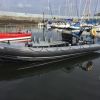
See photo, what you can't see there is the lower strake missing
__________________
|
|
|
|
|
24 February 2009, 19:29
|
#9
|
|
Member
Country: UK - England
Town: Gloucestershire
Boat name: Osprey
Make: Osprey Vipermax
Length: 5m +
Engine: E-tec 300 G2
MMSI: TBC
Join Date: Dec 2006
Posts: 4,020
|
Quote:
Originally Posted by JSP
Yeah length. Saying width because I was looking at it side on. Time to up the dosage!
See photo, what you can't see there is the lower strake missing
|
OK so why two pieces you could do that with one long piece all the way round...
Tips from me include after you have applied the strake run a bead of sikaflex under the bottom edge of the strake particulary the last 1/3 of the strake on either side toward the back end.
Then Dip your finger in some fairy liquid and water (50/50) then smooth over the sikaflex for glass perfect finish. This will prevent water spraying up and lifting that bottom edge off the tube.
I would wait for summer to do this or find some space indoors that can be heated.
Prime the strake with a coat of glue and leave to dry for 24 hours then apply another priming coat when you do the first priming coat Hypalon then one final coat So 3 coats on the strake and 2 on the Hypalon (you could do 3 on the Hypalon if you wanted.)
Otherwise its not as scary as it sounds just be methodical and prep the areas well.
__________________
---------------------------------------------------
Chris Stevens
Born fiddler
|
|
|
|
|
24 February 2009, 19:35
|
#10
|
|
Member
Country: UK - Wales
Town: swansea
Boat name: Too Blue
Make: BLANK
Length: 8m +
Engine: Suzuki DT225
Join Date: Mar 2004
Posts: 12,791
|
Has anyone used Cyanoacrylate for such jobs - it is very good on all sorts of rubbers. i know it sets too quick but it can wick into a joint by capillary action.
__________________
|
|
|
|
|
24 February 2009, 20:26
|
#11
|
|
Member
Country: UK - England
Town: Gloucestershire
Boat name: Osprey
Make: Osprey Vipermax
Length: 5m +
Engine: E-tec 300 G2
MMSI: TBC
Join Date: Dec 2006
Posts: 4,020
|
Quote:
Originally Posted by codprawn
Has anyone used Cyanoacrylate for such jobs - it is very good on all sorts of rubbers. i know it sets too quick but it can wick into a joint by capillary action.
|
Cyano does not flex so would probably be the last thing you would want to use on rubber and hypalon.
Also I dont think it would take to rubber as it needs to be absorbed to work properly.
__________________
---------------------------------------------------
Chris Stevens
Born fiddler
|
|
|
|
|
24 February 2009, 20:53
|
#12
|
|
Member
Country: UK - England
Town: Southport
Boat name: Qudos
Make: 5.4 Searider
Length: 5m +
Engine: Yam 115 V4
MMSI: 235068784
Join Date: Sep 2008
Posts: 3,930
|
Quote:
Originally Posted by Chris
OK so why two pieces you could do that with one long piece all the way round...
Tips from me include after you have applied the strake run a bead of sikaflex under the bottom edge of the strake particulary the last 1/3 of the strake on either side toward the back end.
Then Dip your finger in some fairy liquid and water (50/50) then smooth over the sikaflex for glass perfect finish. This will prevent water spraying up and lifting that bottom edge off the tube.
I would wait for summer to do this or find some space indoors that can be heated.
Prime the strake with a coat of glue and leave to dry for 24 hours then apply another priming coat when you do the first priming coat Hypalon then one final coat So 3 coats on the strake and 2 on the Hypalon (you could do 3 on the Hypalon if you wanted.)
Otherwise its not as scary as it sounds just be methodical and prep the areas well.
|
Thanks for the advice Chris. I think a better photo will help to explain which part I'm replacing as taking one long strip all the way around would be impractical. I'll dig a photo out and post it later.
__________________
|
|
|
|
|
25 February 2009, 00:42
|
#13
|
|
Member
Country: UK - Wales
Town: swansea
Boat name: Too Blue
Make: BLANK
Length: 8m +
Engine: Suzuki DT225
Join Date: Mar 2004
Posts: 12,791
|
Quote:
Originally Posted by Chris
Cyano does not flex so would probably be the last thing you would want to use on rubber and hypalon.
Also I dont think it would take to rubber as it needs to be absorbed to work properly.
|
Cyano is used all the time in industry for gluing rubber - it is the glue of choice. We used to use it for gluing rubber gaiters to ABS plastic bezels - use a bit of activator to speed up drying.
They are used extensively for bonding O rings and all sorts of rubber components. They even use it to glue people's eyes and brains together - truly a "super" glue!!!
__________________
|
|
|
|
|
25 February 2009, 01:07
|
#14
|
|
Member
Country: Other
Town: San Carlos, Mexico
Boat name: INDE
Make: LOMAC 730
Length: 7m +
Engine: 200 Merc.
MMSI: Please press 1
Join Date: May 2006
Posts: 1,688
|
Quote:
Originally Posted by codprawn
Cyano is used all the time in industry for gluing rubber - it is the glue of choice. We used to use it for gluing rubber gaiters to ABS plastic bezels - use a bit of activator to speed up drying.
They are used extensively for bonding O rings and all sorts of rubber components. They even use it to glue people's eyes and brains together - truly a "super" glue!!!
|
Cyano will not work. it is brittle and fails if exposed to moisture continuously.
I have been using it for 30+ years and understand it's limitations. It will also cause some plastics, styrene for example, to craze and crack. It is true that it is often used for temporary holding parts in place, ie. fixturing.
I guess LR's must be put togeher with Superglue. 
__________________
Running around like a head with it's chicken cut off.
|
|
|
|
|
25 February 2009, 02:13
|
#15
|
|
Member
Country: UK - Wales
Town: swansea
Boat name: Too Blue
Make: BLANK
Length: 8m +
Engine: Suzuki DT225
Join Date: Mar 2004
Posts: 12,791
|
http://www.drsfostersmith.com/produc...5&pcatid=18325
What about this then? Used for gluing coral and rocks in aquariums - I would have thought they were pretty moist.............
__________________
|
|
|
|
|
25 February 2009, 04:11
|
#16
|
|
Member
Country: Other
Town: San Carlos, Mexico
Boat name: INDE
Make: LOMAC 730
Length: 7m +
Engine: 200 Merc.
MMSI: Please press 1
Join Date: May 2006
Posts: 1,688
|
Depends on how many prawns are in it.
__________________
Running around like a head with it's chicken cut off.
|
|
|
|
|
25 February 2009, 15:22
|
#17
|
|
Member
Country: USA
Town: Oakland CA
Length: 3m +
Join Date: Feb 2005
Posts: 6,653
|
Quote:
Originally Posted by codprawn
They are used extensively for bonding O rings and all sorts of rubber components. They even use it to glue people's eyes and brains together - truly a "super" glue!!!
|
Last I checked, eyes and brains are not made of rubber.
The problem with cyanoacrylates is that, once set, they don't flex or stretch, two things that RIB tubes do (at least to a small extent.) End result is the bond failing.
Quote:
Originally Posted by Chris
Also I dont think it would take to rubber as it needs to be absorbed to work properly.
|
Not sure that's true; two flat pieces of metal can be quite permanently glued with CA.
Quote:
|
Originally Posted by Codprawn
What about this then? Used for gluing coral and rocks in aquariums - I would have thought they were pretty moist.............
|
Corals don't flex and stretch much, either.
jky
__________________
|
|
|
|
|
25 February 2009, 15:50
|
#18
|
|
Member
Country: UK - Wales
Town: swansea
Boat name: Too Blue
Make: BLANK
Length: 8m +
Engine: Suzuki DT225
Join Date: Mar 2004
Posts: 12,791
|
Rubber belllows and gaiters do though and they are used extensively for that!!!
__________________
|
|
|
|
|
25 February 2009, 18:59
|
#19
|
|
Member
Country: UK - England
Town: Gloucestershire
Boat name: Osprey
Make: Osprey Vipermax
Length: 5m +
Engine: E-tec 300 G2
MMSI: TBC
Join Date: Dec 2006
Posts: 4,020
|
OK feel free to use it on your rib I think I will just stick to the well proven hypalon glue.
__________________
---------------------------------------------------
Chris Stevens
Born fiddler
|
|
|
|
|
25 February 2009, 19:11
|
#20
|
|
Member
Country: UK - Wales
Town: swansea
Boat name: Too Blue
Make: BLANK
Length: 8m +
Engine: Suzuki DT225
Join Date: Mar 2004
Posts: 12,791
|
It could have advatages. If a rubbing strake is peeling slightly at the edges you could run a bit of superglue along the edge and just press together. If it fails you will have to prepare it properly anyway. Sounds like there would be nothing to lose by trying it!!!
__________________
|
|
|
|
|
|
 Posting Rules
|
You may not post new threads
You may not post replies
You may not post attachments
You may not edit your posts
HTML code is Off
|
|
|
|
 Recent Discussions
 |
|
|
|
|
|
|
|
|
|
|
|
|
|
|
|
|
|
|
|
|
|
|
|
|
|
|
|
|
|
|
|
|
|