 |
|
 30 January 2012, 20:57
|
#1
|
|
Member
Country: Ireland
Town: Ireland
Boat name: Tyson
Length: 5m +
Engine: Evinrude ficht 150
Join Date: Jan 2012
Posts: 10
|
Voltage drop while engine under load
Fellow Boat People ,
I have a problem !!!
I have a 1997 Evinrude 150 FICHT engine running like mouses heart, problem is that when the engine is idling the voltage is a steady 14.5v no problem but and there is always a but as the revs increase the voltage drops right off down to as low as 10v and drains the battery right down even the VHF goes to channel 16 sensing the voltage drop, and when the engine returns to idling speed the voltage returns to 14.5 V.
I need help !!!!
ps had an evinrude mechanic tell me to test battery ,all tests passed !!!!
Any idea's
__________________
|

|

|
|
30 January 2012, 21:25
|
#2
|
|
Member
Country: UK - England
Town: Gloucestershire
Boat name: Osprey
Make: Osprey Vipermax
Length: 5m +
Engine: E-tec 300 G2
MMSI: TBC
Join Date: Dec 2006
Posts: 4,020
|
Voltage regulator ?
Not sure to be honest, might be worth calling Steve at Race Marine in Taunton.
__________________
---------------------------------------------------
Chris Stevens
Born fiddler
|
|
|
|
|
30 January 2012, 21:36
|
#3
|
|
Member
Country: Ireland
Town: Ireland
Boat name: Tyson
Length: 5m +
Engine: Evinrude ficht 150
Join Date: Jan 2012
Posts: 10
|
Thanks fiddler ,
Been told Voltage regulator just for converting from AC to DC ???
Ribdiver
__________________
|
|
|
|
|
30 January 2012, 21:53
|
#4
|
|
Member
Country: UK - England
Town: Gloucestershire
Boat name: Osprey
Make: Osprey Vipermax
Length: 5m +
Engine: E-tec 300 G2
MMSI: TBC
Join Date: Dec 2006
Posts: 4,020
|
Quote:
Originally Posted by Ribdiver

Thanks fiddler ,
Been told Voltage regulator just for converting from AC to DC ???
Ribdiver
|
Its Mr Fiddler if you dont mind...
This explains the role of a voltage regulator.
"Your battery is 12 volts, but to keep the battery 100% charged and run all of your car's electrical doo-dads at the same time, the alternator has an output of between 13.5 and 14.8 volts. We'll learn more about that in a second. The alternator has three main components: The Stator, Rotor, Diode and a voltage regulator. When the alternator belt or V-belt spins the pulley on the alternator, the rotor inside the alternator spins ... fast. The rotor is basically a magnet or group of magnets that spin, with all that speed, inside a nest of copper wires. These wires are called the stator. I won't go into all of the details about why a magnet spinning within a bundle of copper produces electricity, but it does. (If you want some more technical details, check out this great article on How Electric Motors and Generator Work from my buds at Alt Fuels.) The next step in the chain is a diode assembly that changes the electricity from AC to DC current that your battery can use. There is a final step in the chain, the voltage regulator. In modern alternators, this is a built-in component. Back in the day voltage regulators were big black boxes that had to be bolted somewhere under the hood and wired into the system. The voltage regulator is basically a gatekeeper that will shut off the flow of juice to your battery if the voltage goes above a certain level, usually 14.5 volts. This keeps your battery from getting overcharged and cooked. That's it! As your battery is drained, current is allowed to flow back into it from the alternator and the cycle goes on and on."
Before you go off buying a voltage regulator however do check all your wiring for a bad earth etc. Clean the battery terminals and if you have wingnuts on them then replace these with nylocks.
I would also check under the cover of the engine check terminals and connections for wear or corrosion coat the terminals in electrical grease etc.
__________________
---------------------------------------------------
Chris Stevens
Born fiddler
|
|
|
|
|
30 January 2012, 22:09
|
#5
|
|
Member
Country: Ireland
Town: Ireland
Boat name: Tyson
Length: 5m +
Engine: Evinrude ficht 150
Join Date: Jan 2012
Posts: 10
|
No I don't mind !!!!
Thanks for reply .
I've tried everything connections etc.
Problem is very hard to test because only happens under heavy load !!!!aaahhhh!!!
Ken
Ribdiver
__________________
|
|
|
|
|
30 January 2012, 22:12
|
#6
|
|
Member
Country: UK - Scotland
Town: Girvan & Tayvallich
Boat name: Breawatch
Make: Ribcraft
Length: 5m +
Engine: Mercury 150 F/stroke
MMSI: ex directory!!
Join Date: Sep 2008
Posts: 6,203
|
Pluis one what Chris says. I also changes from w/nuts to proper connectors. Does your bat cables go in a tube under deck to engine if so check both cables for corrosion.
Hope you get it fixed.
__________________
jambo
'Carpe Diem'
Member of the ebay Blue RIB cover club
Member of SABS ( Scottish West Division)
|
|
|
|
|
30 January 2012, 22:25
|
#7
|
|
Member
Country: Ireland
Town: Ireland
Boat name: Tyson
Length: 5m +
Engine: Evinrude ficht 150
Join Date: Jan 2012
Posts: 10
|
Jambo thanks for reply,
Never thought of cables running under deck.
done major refurb 2 years ago changed cables but will pull them to check condition.
Thanks
Ken Ribdiver
__________________
|
|
|
|
|
30 January 2012, 22:28
|
#8
|
|
Member
Country: UK - Scotland
Town: Girvan & Tayvallich
Boat name: Breawatch
Make: Ribcraft
Length: 5m +
Engine: Mercury 150 F/stroke
MMSI: ex directory!!
Join Date: Sep 2008
Posts: 6,203
|
No problem Ken that was what caused me no end of trouble three years back.
J
__________________
jambo
'Carpe Diem'
Member of the ebay Blue RIB cover club
Member of SABS ( Scottish West Division)
|
|
|
|
|
31 January 2012, 13:41
|
#9
|
|
Member
Country: UK - England
Town: North Lincolnshire
Length: no boat
Join Date: Sep 2011
Posts: 49
|
How is the alternator driven if its via a belt check the tension sounds like its slipping when the engine is revved.
__________________
|
|
|
|
|
31 January 2012, 14:03
|
#10
|
|
Member
Country: UK - England
Town: Gloucestershire
Boat name: Osprey
Make: Osprey Vipermax
Length: 5m +
Engine: E-tec 300 G2
MMSI: TBC
Join Date: Dec 2006
Posts: 4,020
|
The alternator is part of the flywheel.
__________________
---------------------------------------------------
Chris Stevens
Born fiddler
|
|
|
|
|
31 January 2012, 14:17
|
#11
|
|
Member
Country: UK - England
Town: Bursledon
Boat name: Mustard
Make: Ribeye 785
Length: 7m +
Engine: Yamaha 200/Merc 6
MMSI: 235068693
Join Date: Oct 2006
Posts: 618
|
It sounds to me as if the insulation of the alternator coil is breaking down under load.
Does the voltage also fall if you increase the engine speed under no load?
Take it up to, say, 4000 rpm and measure the voltage.
__________________
Tony
|
|
|
|
|
31 January 2012, 14:32
|
#12
|
|
Member
Country: UK - England
Town: Northampton
Make: RibTec
Length: 5m +
Engine: Outbaord mariner 75
Join Date: Apr 2011
Posts: 506
|
also put the meter on to the AC setting and see if there is any AC voltage there.
if there is then the regulator is not working. ( rectifer breaking down)
__________________
|
|
|
|
|
31 January 2012, 15:37
|
#13
|
|
Member
Country: UK - Scotland
Boat name: Wildheart
Make: Humber/Delta Seasafe
Length: 5m +
Engine: Merc 60 Clamshell
MMSI: 235068449
Join Date: Apr 2007
Posts: 4,671
|
Other one to check is the main isolator. Considering what they do and what relies on them to work, they have to be the least waterproof switches ever designed.....
I now carry a short jump cable and have two spare nuts on the switch terminals after having two failures. 
__________________
|
|
|
|
|
31 January 2012, 18:54
|
#14
|
|
Member
Country: USA
Town: Seattle
Boat name: Water Dog
Make: Polaris
Length: 4m +
Engine: Yamaha 60hp
Join Date: Apr 2007
Posts: 1,152
|
Quote:
Originally Posted by jezza2011
also put the meter on to the AC setting and see if there is any AC voltage there.
if there is then the regulator is not working. ( rectifer breaking down)
|
+1
Start at the alternator itself before the rectifier and voltage regulator (which are often one epoxy potted unit anyway). I don't think this is a cabling issue. But basically I would start:
1) AC voltage across alternator output
2) AC amps at regulator output
3) DC voltage across rectifier-regulator output
4) DC amps at regulator output
5) DC voltage at battery posts
6) DC amps at positive battery terminal
7) Then DC amps at return points to alternator again.
The amps are small enough you should be able to check both the voltage and then disconnect the positive cable and check the amps at each point. But check that your meter can handle the load. Clamp the meter leads to the disconnect lead with pliers. If your meter can't handle the amps you can get one of the wrap around types to check amperage.
I would have all the other loads turned off for this demo.
__________________
|
|
|
|
|
31 January 2012, 19:28
|
#15
|
|
Member
Country: UK - N Ireland
Boat name: *
Make: replacement soon!
Length: no boat
Join Date: Jul 2010
Posts: 149
|
Based on the assumption that all connections are clean and performing well can I ask what method was used to test the battery? If this was not a high rate discharge test your time was wasted (assuming it is a lead acid battery and not GEL filled) if not this is you first action.
At low rpm high alt output is normal and as the rpm increase it can drop off but never below nominal battery voltage. In essence you either have a battery which has a open circuit (internal fault) or an alternator fault.
__________________
|
|
|
|
|
31 January 2012, 21:46
|
#16
|
|
Member
Country: Ireland
Town: Ireland
Boat name: Tyson
Length: 5m +
Engine: Evinrude ficht 150
Join Date: Jan 2012
Posts: 10
|
Fellows Swabs
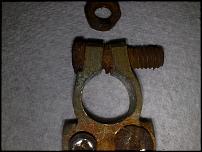
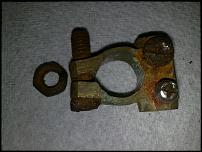
I wonder is this the culprit !!!!! 
Was about to start stripping out cables to check condition and found this
Will fit new connectors and see what happens ,fingers crossed cheap fix hopefully 
Will post results
Many thanks for all reply's
Ken
Ribdiver
__________________
|
|
|
|
|
31 January 2012, 22:38
|
#17
|
|
RIBnet Supporter
Country: Ireland
Length: 4m +
Join Date: Feb 2008
Posts: 14,683
|
On the face of it, it doesn't look too bad, but the join between the copper and the connector has to be tiptop. I had a day out ruined by an old crimped connector with a seal on it. It looked and felt fine, but the join was poor and reduced the current to the point where the starter wouldn't turn. After that I started packing spares and a bolt for joining cables
__________________
I'm sorry, but there IS no Mars Bar.
|
|
|
|
|
01 February 2012, 15:32
|
#18
|
|
Member
Country: USA
Town: Oakland CA
Length: 3m +
Join Date: Feb 2005
Posts: 6,653
|
Quote:
Originally Posted by 9D280
Other one to check is the main isolator
|
Battery switch? Never had a problem with mine (though to be fair, it's in a fairly dry location.)
jky
__________________
|
|
|
|
|
01 February 2012, 15:44
|
#19
|
|
Member
Country: UK - Scotland
Town: Girvan & Tayvallich
Boat name: Breawatch
Make: Ribcraft
Length: 5m +
Engine: Mercury 150 F/stroke
MMSI: ex directory!!
Join Date: Sep 2008
Posts: 6,203
|
Ken
get a new pair of connectors the difference will be marked. You have to have good surface contact.
__________________
jambo
'Carpe Diem'
Member of the ebay Blue RIB cover club
Member of SABS ( Scottish West Division)
|
|
|
|
|
01 February 2012, 16:37
|
#20
|
|
Member
Country: UK - N Ireland
Boat name: *
Make: replacement soon!
Length: no boat
Join Date: Jul 2010
Posts: 149
|
Quote:
Originally Posted by Ribdiver
Attachment 65311
Attachment 65312
I wonder is this the culprit !!!!!
Was about to start stripping out cables to check condition and found this
Will fit new connectors and see what happens ,fingers crossed cheap fix hopefully
Will post results
Many thanks for all reply's
Ken
Ribdiver
|
Solder the cable in as opposed to crimp!
__________________
|
|
|
|
|
|
 Posting Rules
|
You may not post new threads
You may not post replies
You may not post attachments
You may not edit your posts
HTML code is Off
|
|
|
|
 Recent Discussions
 |
|
|
|
|
|
|
|
|
|
|
|
|
|
|
|
|
|
|
|
|
|
|
|
|
|
|
|
|
|
|
|
|
|









 Breawatch